Grain Patterns in Hardwood Gate Timber: The Role of Selection in Durable Construction


- Gates
- Railings
- Fencing
- Accessories
& Fitting- Sheds
& Storage- Garden Structures
- Design
& Style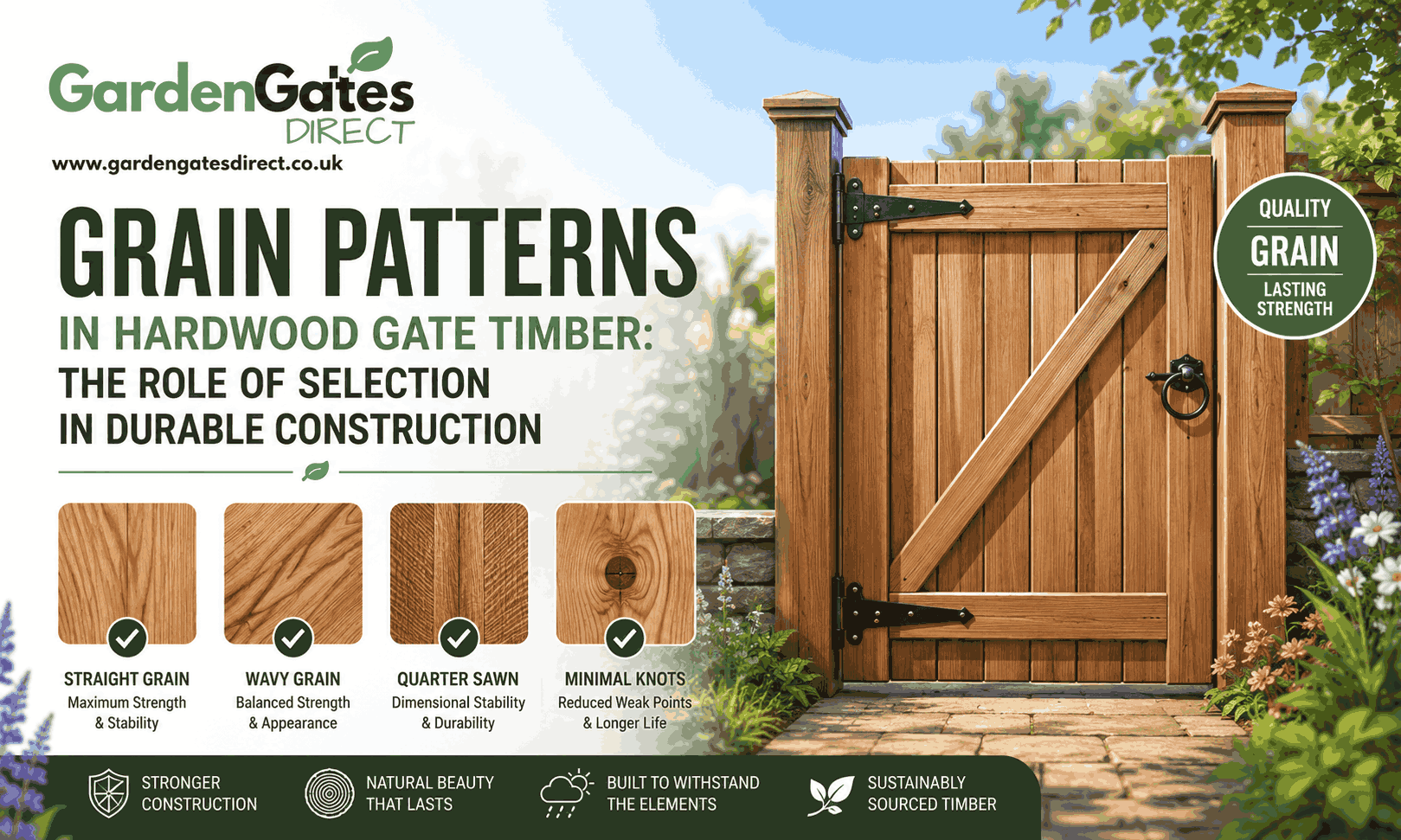
Not all hardwood gates are built alike, despite looking identical in terms of aesthetics and price. One of the most crucial factors influencing a timber product's durability is the grain pattern, and understanding how it impacts year-round performance. At Garden Gates Direct, we've seen plenty of beautifully crafted gates deteriorate far too quickly, whilst timber which would be considered inferior lasts exceptionally well.
The Importance of Grain Patterns
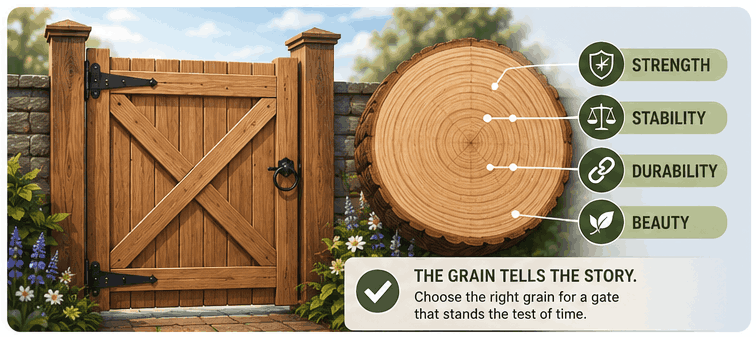
The way the rings grow in a tree determines not only its beauty but how it behaves once manufactured into planks, and how it performs in Britain's ever-changing climate conditions. By taking the time to learn to read the timber's grain pattern before you make an investment, you ensure your product lasts many decades to come.
Why Grains Patterns Determine Hardwood Gates Lifespan
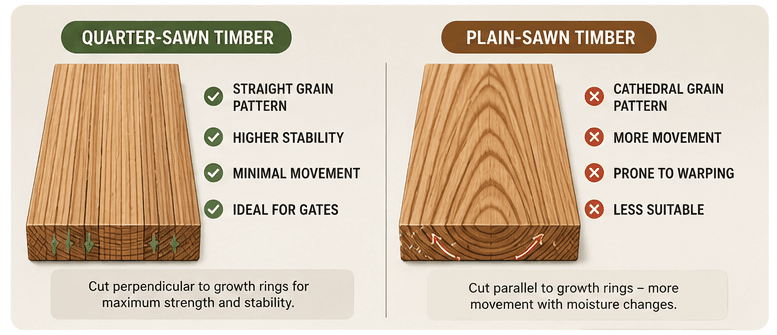
Every type of sawing influences the appearance of grains in planks. For example, quarter sawn timber features straight, parallel grain patterns across the surface of planks because this timber type is cut perpendicular to tree rings. Such an approach uses less timber compared to plain-sawn timber, which is why quarter-sawn planks are quite expensive.
However, such timbers also tend to provide enhanced stability because they expand minimally in the course of changing moisture levels in the environment.
The same can't be said about plain-sawn timbers. These are cut parallel to the growth rings, and as a result, the timber moves much more with fluctuating levels of moisture. While cathedral grain patterns look beautiful, they tend to distort over time due to expanding width compared to height. This type of timber becomes unsuitable for gates very quickly.
Growth Patterns in Different Types of Hardwood Timber
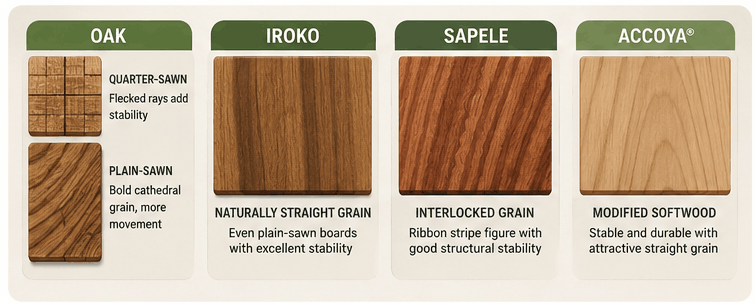
It's essential to know what kind of grain patterns you're likely to see depending on species and sawing method, and how they will influence the timber's performance in gates.
For instance, oak usually features pronounced grain patterns. European oak shows clear medullary rays, forming the distinctive flecked appearance on the quarter-sawn surface of boards. Interestingly enough, these rays improve stability, as they run perpendicular to tree growth rings, thus providing natural reinforcement.
Plain-sawn timber of oak features dramatic cathedral patterns that move quite a bit when the environment changes.
On the contrary, the natural grain patterns in iroko are fairly straight, which makes it easy to produce this wood variety without any issues related to stability. In turn, even plain-sawn iroko will show relatively little dramatic figure, which means this wood is great for use in gates. Despite its relative lack of spectacular figures, it remains quite popular with customers.
As for sapele, its unique property is an interlocked structure of fibres that go around a tree's core instead of straight up. In turn, quarter-sawn sapele shows off the distinctive ribbon stripe effect. The interlocked nature of the timber provides some additional benefits in structural terms, although the treatment should be applied carefully.
Accoya is a modified form of softwood; however, it retains its original grain pattern from radiata pine, which forms an interesting figure. Thanks to the treatment process, the timber acquires outstanding durability, no matter the grain pattern.
How to Choose Timber Based on Its Grains
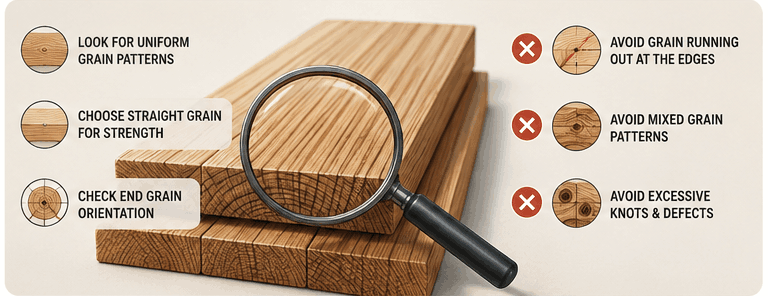
It's crucial to choose boards carefully based on their grain patterns and other features to ensure the gates' longevity. Here are some tips that might help you avoid potential mistakes.
First of all, always look for boards with uniform grain patterns used in a product. It's highly probable that a product is made from boards of various logs or even different types of timber if the patterns differ.
Moreover, it's always preferable to opt for straighter grains for the parts carrying loads in gates. After all, there's no point in making the frame decorative while the rest is functional.
It's also important to check the grain patterns at the board's ends to get a better idea of what will happen to it after cutting into smaller pieces. Ideally, rings should grow perpendicular to the broadest surfaces to ensure minimal movements.
Another thing to keep in mind when choosing timber is avoiding grain patterns extending at the edges of the board. Grain that tends to lean towards the sides and doesn't grow parallel to the board's length won't be as strong and prone to splitting easily.
Joinery Issues Related to Grain Patterns
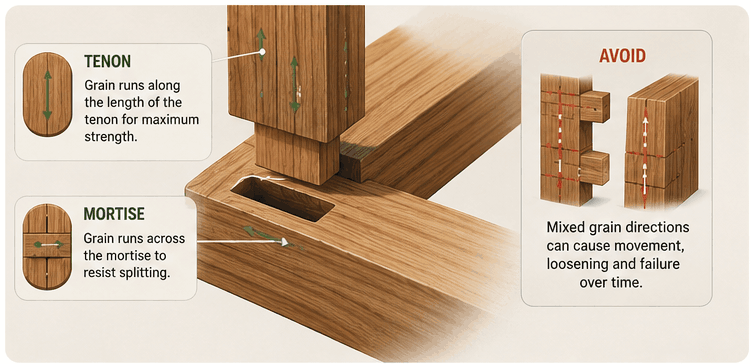
When it comes to the traditional method of timber joining in gates, you have to pay close attention to grains.
To start with, the mortise-and-tenon joint relies heavily on grain orientation for its strength. Tenons should run along grain direction so that the wood fibres provide maximum resistance to the pulling force exerted on them.
The mortise should also be cut perpendicular to the grain so that it resists splitting better.
Finally, mixed grain patterns in different timber elements at a joint point are likely to result in differential movement over time. As a result, gates tend to become unstable with time.
Timber Treatment in Relation to Grain Patterns
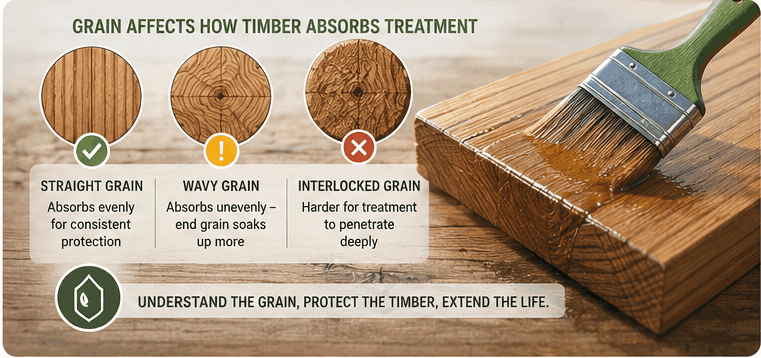
The absorption patterns of timber depend greatly on its grain patterns because liquid spreads differently depending on how the rings are arranged.
For instance, straight-grained timber absorbs the substance relatively evenly as the fibre pattern is straight.
Conversely, wild grains tend to absorb treatment substances unevenly, with end grain absorbing faster than face grain. As a result, certain areas get treated sufficiently, whereas others don't get treated enough.
Lastly, interlocked grains make it hard for liquids to penetrate the timber due to the complex nature of wood fibre structure.
Conclusion
In conclusion, it should be noted that grain patterns determine the lifespan of hardwood gates in the UK as the most important factor. If the grain pattern isn't stable, the gate will warp and distort with time, making it difficult to open or close properly. As a result, it won't serve you for decades.
- Railings