Spring Gate Inspection: Post-Winter Damage Assessment Checklist


- Gates
- Railings
- Fencing
- Accessories
& Fitting- Sheds
& Storage- Garden Structures
- Design
& Style.png)
Finally, winter is loosening its grip, and we're enjoying the first real period of dry weather since last autumn! The lawns are crying out for their first cut, and the garden is shaking off the cobwebs. But while you're busy using your garden rake and assessing the damage, there is another area in your garden demanding your attention – your gates.
You see - your gates have had to endure January's freezing temperatures, followed by February's incessant rain. And while we're enjoying those dry spells we've been craving since last autumn, winter's damage is revealing itself in full glory. The gates, which may have closed properly in October, may now be binding. The gate posts, which may have felt solid last autumn, may now be wobbling. The gate hardware, which may have opened and closed properly, may now have seized or loosened.
But the harsh reality is this: most people discover their gate problems in March, and these problems can cost them hundreds to repair. The same problems, had they been noticed in June, would have cost them thousands. The winter damage can compound very quickly, especially once growth resumes and summer weather sets in. The slightly loose gate post can turn into a disaster, the rust spots can turn into major corrosion, and the alignment issues can turn into gates that won't close at all.
At Garden Gates Direct, we've witnessed this scenario play out countless times in our more than 25 years in the industry. The difference between gate longevity and early replacement is not in the quality of the gates but in the timely detection of problems. This comprehensive gate inspection checklist will help you identify what damage winter has wrought and what action you should take.
The Strategic Inspection Approach
Don't just glance at gates while walking to the wheelie bin. Strategic inspection involves the systematic evaluation of all parts of the gate. Get yourself a note pad and set aside thirty minutes to go through all the sections methodically. Take photographs of anything suspicious. These will be useful in tracking whether the problem is getting worse or staying the same.
Start with gates in the mid-morning on dry days. In the morning, the sun will show surface damage that the afternoon sun will not reveal. On dry days, gates can be opened and closed to test their operation without rain interference.
Wet gates will not show binding issues and make it impossible to assess surface rust.
Coating and Treatment Condition
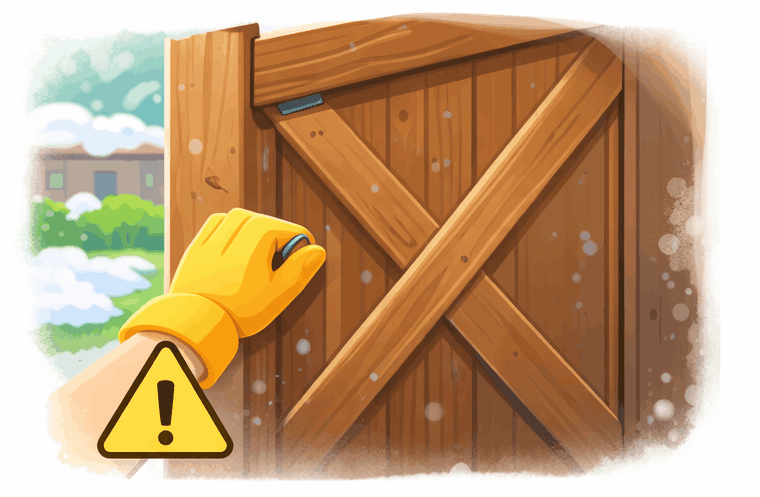
The condition and protection of timber gates especially depend solely on the condition and quality of the coatings. The winter weather strips away protective coatings aggressively.
Look for areas where the timber is not protected at all. If the timber is not completely protected, damage can progress very fast in the spring and summer.
Look for areas where the coating is bubbling, flaking, and peeling off. This is a sign that moisture has penetrated into the timber beneath the protective coatings. Simply recoating these areas does not solve the problem. The problem has to be addressed at the source, and this can only happen after the old, damaged coatings are removed.
Test the adhesion of the coating. Press on the suspect areas. Well-adhered coatings do not lift. Coatings failing, on the other hand, show signs of movement. This test exposes existing problems not yet visible on the surface.
Structural Timber Assessment
Winter's effect on timber structures, such as those subjected to freeze-thaw, is very stressful. Inspect all timber structures very well.
Check the diagonal bracing on ledge and brace gates. Press on the diagonal bracing and check for movement. Good bracing does not show movement at all. Signs of loosening show up as movement when pressure is applied. Loosening means fixings have loosened, and timber has failed.
Check the stability of the gate frame. Hold the gate and try racking it diagonally. Good frames do not show movement at all. Loosening of fixings and timber shows up as movement. Do not apply pressure, as this might further damage the gate.
Inspect fixings on wooden gates. Check for rust stains on screws. Rust stains show signs of penetration. Check for enlarged screw holes. Enlarged screw holes show signs of compression, either from stress or moisture penetration.
Metal Gate Winter Examination
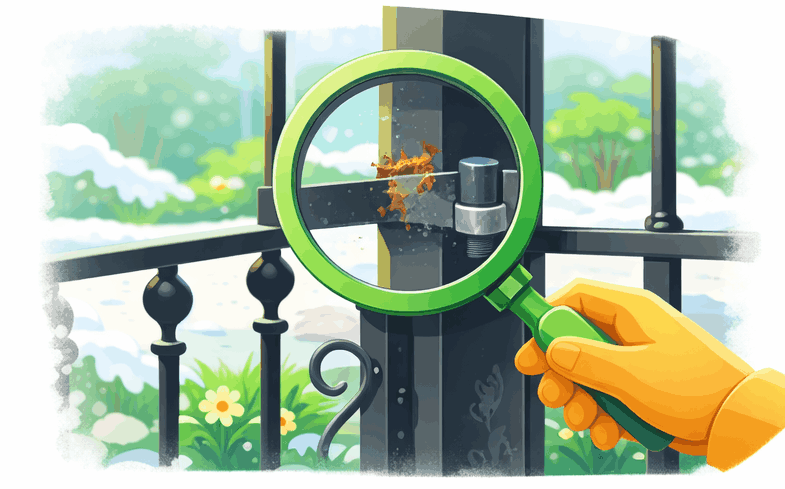
Steel gates are less likely to show effects of winter, but they have other problems. Inspecting these gates systematically exposes problems before they compromise the gate's structural integrity.
Protective Coating Assessment
Metal gate durability depends on the condition of the coating. Once the coating fails, corrosion sets in immediately. Spring inspection reveals where winter attacked the gate's coating.
Inspect all surfaces under bright light. Check for areas where the coating appears thinner, shinier, and/or has a different texture. These signs show the coating is failing.
Look for signs of coating cracks, especially where there are welds, fixings, and decorative features. These are high-stress areas where cracks are likely to appear. Minor cracks in the coating are not very noticeable, but they allow moisture to reach the metal underneath.
Carefully examine horizontal surfaces and water-collecting areas. Coating failures start where moisture is present for the longest periods of time. Top rails, decorative ledges, and flat surfaces fail first, followed by vertical surfaces.
Coating adhesion testing involves pressing on the surface. Good coatings feel hard throughout. Coatings with failures feel slightly soft.
Corrosion Detection
Presence of surface rust is a sign of coating failure. Do not take minor surface rust lightly. Surface rust is a sign of minor damage to coatings.
Surface rust is identified by orange-brown discoloration. Surface rust is a sign of recent failure of coatings. Surface rust should be addressed before it progresses. Surface rust progresses quickly if left unchecked.
Rust streaks from decorative items, welds, and other fixtures are signs of internal corrosion. These are signs of more serious problems than surface rust.
If possible, inspect inside hollow sections of metal gates. Internal rust is progressing unseen and can cause serious problems. Tap hollow sections of metal gates. Solid sounds indicate good metal. Dull sounds indicate internal rust and/or water accumulation.
Weld and Joint Integrity
Welds are subject to maximum stress on metal gates. Winter weather puts maximum stress on welds due to temperature extremes.
Welds should be inspected visually for cracks. Cracks along and across welds indicate stress damage. Stress damage progresses quickly.
Rust presence is especially important for welds. Surface rust is present more often at welds than other areas. Coatings often fail first at welds due to differences in metal type.
Pressing of welds and other joints is a way of testing integrity. Good welds and joints have zero movement. Movement is a sign of weld failure.
Post and Foundation Problems
The gates hang on posts. Everything else depends on post stability. Winter ground movement affects posts greatly.
Post Stability Testing
Each post should be tested separately. Push it firmly at shoulder height. Zero movement is a sign of perfect installation. Movement of any sort indicates poor foundations.
The extent of movement is important too. Some movement might mean minor settlement. More movement, like wobbling, is a sign of serious foundation failure.
Each post should be pushed from different angles. Posts might be stable front and back but wobbly from left and right. Testing them thoroughly gives a complete picture.
Foundation Assessment
Check ground level around each post. Gaps between post and concrete haunching indicate settlement and frost heaving. These gaps increase over time. Larger gaps mean foundations are failing.
Check if there are cracks on the haunching. Freeze-thaw cycles damage foundations and lead to cracks on the concrete. Cracked haunching is weakened and allows water penetration.
For timber posts, insert screwdrivers at ground level. Rotten wood allows for easy penetration. Solid wood resists penetration firmly. Post base rot demands replacing the post entirely.
Metal posts rust at ground level and appear perfect above ground. Inspect metal post entry points very closely. Signs of rusting, flaking, and softness mean serious rusting.
Hardware and Operation Assessment
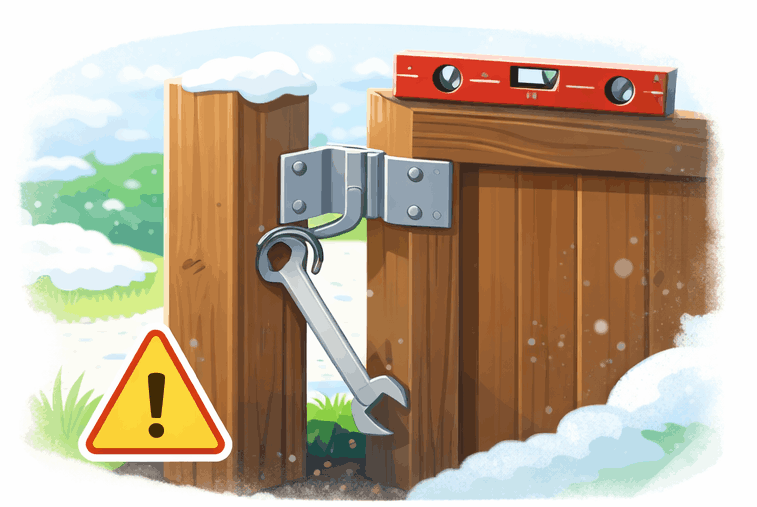
The gate operation is essential. Hardware is responsible for gate operation success. Winter affects hardware greatly.
Hinge Condition
Slowly open and close gates and listen for sounds. Squeaking sounds mean lubricants have been washed away. Grinding sounds mean metal is rubbing against metal. Clicking sounds mean hardware is loose and bearing surfaces are damaged.
Observe the operation of the hinges. They must move smoothly with no play. Gaps between the hinge parts indicate wear, which will cause alignment issues.
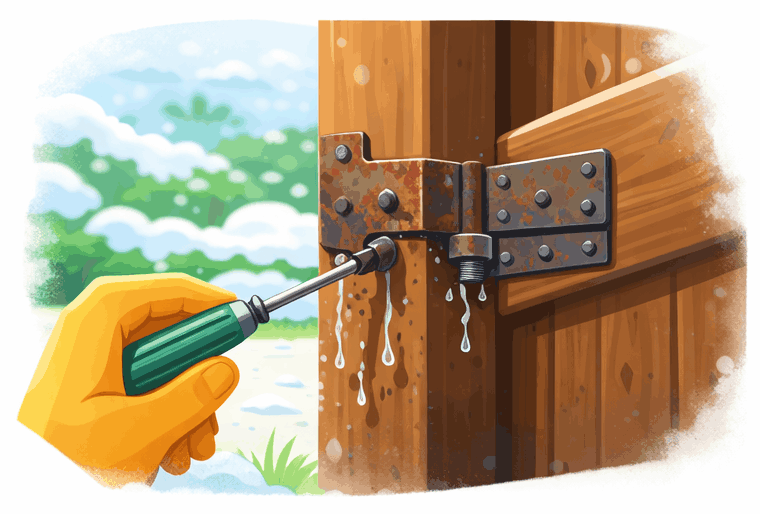
Inspect the hinge mounting points. Signs of rust around the fixing points indicate moisture penetration. Test each fixing to ensure they are tight. The loosening effect of winter temperatures will have loosened the fixings.
Inspect the hinge pins. Signs of wear on the hinge pin indicate grooving. When the hinge pin becomes grooved, the gates will drop very fast. Replacement of the pin will solve this problem.
Latch Function
Test the latches several times. The latches must close every time with smooth operation. Intermittent operation may indicate alignment issues.
Inspect the latches to see if they are in the normal position. Compare the gaps between the latch tongue and the strike plate with previous positions to see if the latch has shifted or the post has moved.
Inspect the latches to see if there is rust inside the latch mechanisms. Latches with rust inside will not function properly and will fail.
The Spring Inspection Advantage
Don't wait until July to discover the issues that we can spot in March that will end up costing you thousands to repair.
The gates that will continue to function for another decade or more are not the most expensive gates, but the gates that we have inspected and maintained as part of our spring inspection.
Your gates have kept your property safe all winter, and now that spring is here, it is time to give them the systematic inspection that ensures they continue to function as expected and don't fail catastrophically because of neglected damage that we can spot in March.
We at Garden Gates Direct have supplied top-notch gates to homeowners in the UK and beyond for over 25 years.
The gates that will continue to function for another decade or more are not the most expensive gates, but the gates that we have inspected and maintained as part of our spring inspection.
Your gates have kept your property safe all winter, and now that spring is here, it is time to give them the systematic inspection that ensures they continue to function as expected and don't fail catastrophically because of neglected damage that we can spot in March.
- Railings