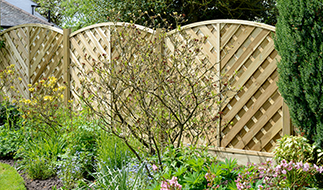
The Rise of Composite Materials: Why They are Taking Over Traditional Gates


- Gates
- Railings
- Fencing
- Accessories
& Fitting- Sheds
& Storage- Garden Structures
- Design
& StyleFor centuries, traditional timber gates dominated residential properties. The reasons were obvious: wood was widely available, relatively inexpensive, and craftsmen knew how to work with it. Metal gates existed, but they cost significantly more and required specialist fabrication. Composite gates have seemingly taken the market by storm - and it seems they're here to stay.
This stable situation began to shift around 2010, driven by several factors happening at once. The prices of timber rose steadily as quality hardwood became scarcer. Labour costs for traditional joinery rose more rapidly than general inflation. Meanwhile, composite manufacturing scaled up dramatically, driving costs down.
More importantly, homeowner expectations changed. The generation that's buying homes now grew up with UPVC windows and low-maintenance everything. They've never painted window frames. Never treated decking annually. The concept of regular maintenance seems outlandish to them.
Traditional timber gates do require some form of annual treatment, or repainting every few years, continuous attention to hinges and joints and so on. Most modern homeowners simply aren't going to do this maintenance. They'd rather pay more for something upfront they can then ignore.
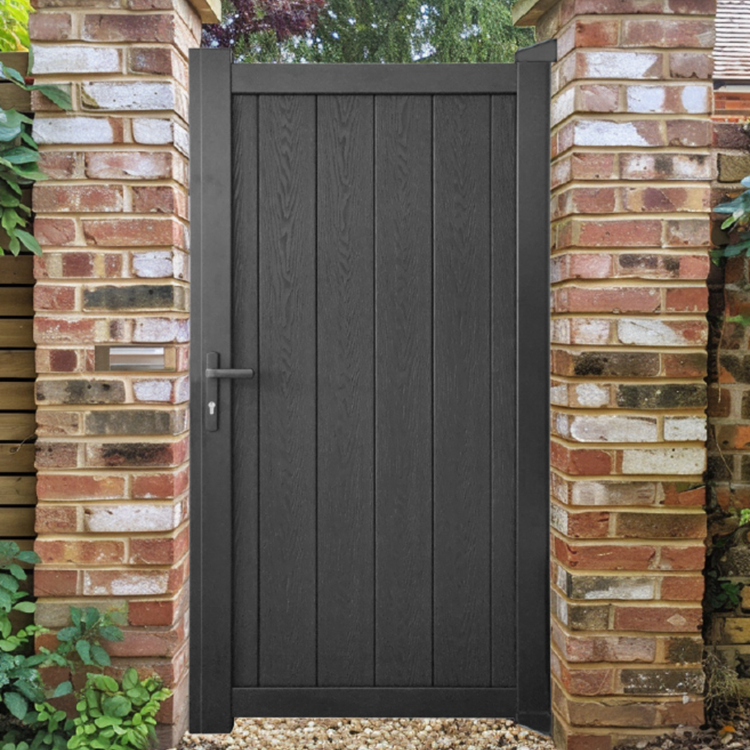
The rot question disappears with Composites
Wood rots. That's just basic reality, regardless of treatment or quality. Pressure treatment postpones rot. Quality hardwood resists longer. Eventually though, rot takes hold.
First to rot in end grain areas in timber? Not a concept with composites. Ground contact that requires special treatment for wood? Composites handle it directly. The vulnerable points that determine timber gate lifespan simply do not exist.
Dimensional Stability Works Mostly
Timber swells and shrinks with changes in moisture. This causes binding, warping, and joint problems. Composites move less, though not as little as manufacturers sometimes claim.
Movement that takes place in composites follows more predictable patterns. Temperature changes affect them more than moisture. Design can allow for this through proper clearances and installation methods. The movement of timber due to moisture is harder to predict or manage.
Gates that close properly matter all year round, more than most people realise until they're fighting a swollen timber gate in the October rain. Composites deliver operational consistency that just isn't matched by timber, without its constant maintenance.
Growing Aesthetic Acceptance
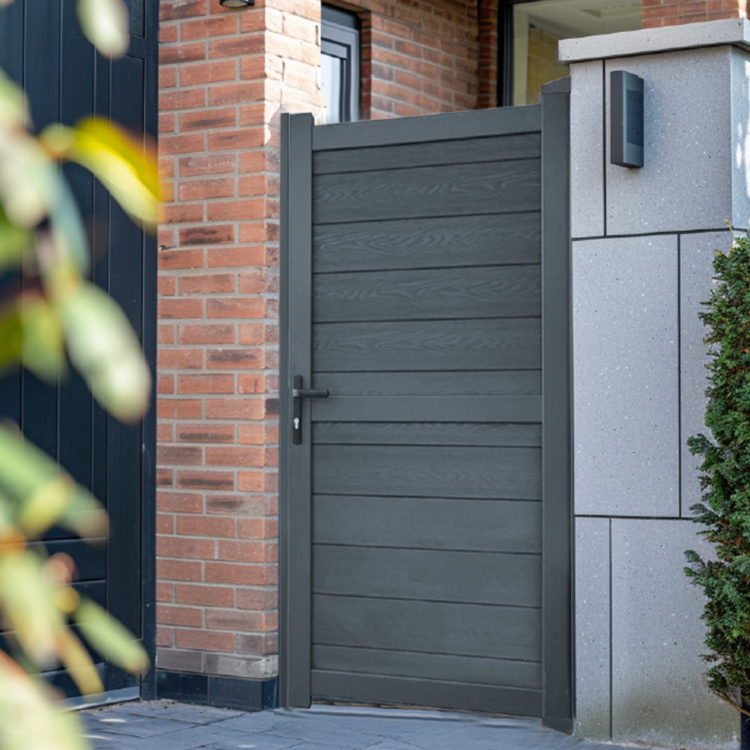
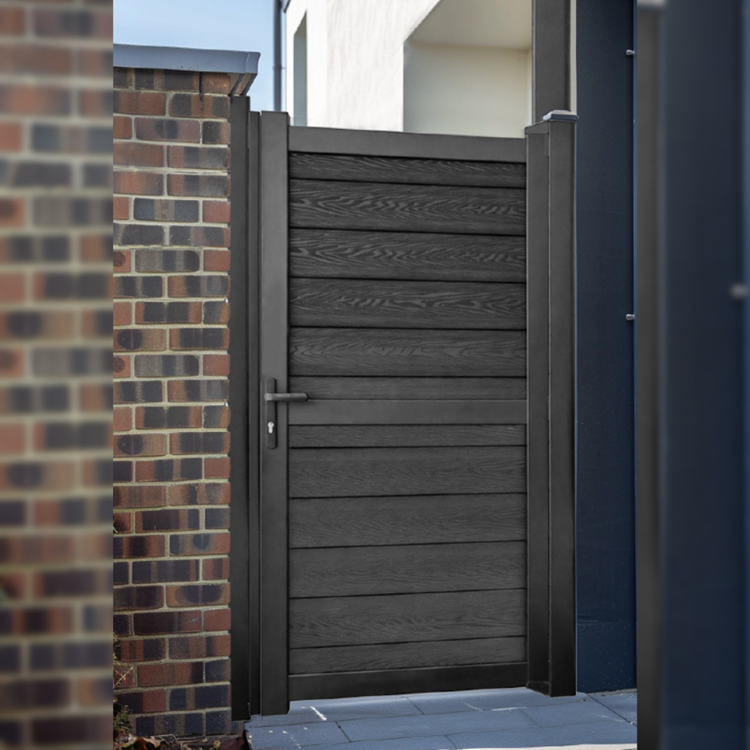
Early composite gates looked obviously plastic. Unconvincing fake wood grain. Wrong texture. Unnatural colours. They have come a long way since then. Modern composites convincingly mimic the timber grain patterns at normal viewing distances.
Aesthetic judgment shifted too. Younger buyers never expected the gates to look precisely like the traditional timber. They grew up surrounded by composite decking, UPVC cladding, and synthetics everywhere. Composite gates seem normal, not cheap substitutes.
Traditional purists still prefer real wood or metal. Period properties benefit from authentic materials. But for most modern homes, the composites serve quite well. The aesthetic compromise that bothered earlier buyers barely registers now.
Gates made of timber should be handled with care. The wood may split when the gate is installed. Hinges must be very accurately positioned. The cuts made for treatment must be sealed. Installation is slower and more skillful. There's more to go wrong.
Composites are more forgiving. Drill holes don't cause the material to split unexpectedly. Cuts don't require sealing. The material is more tolerant of installation errors. To companies that employ installers of widely ranging skill levels, this reliability is enormously important.
Warranty claims are significantly reduced with composite materials when compared to timber. There will be less warping, splitting, and/or premature deterioration. It minimizes costs and hassle for both suppliers and installers. They steer customers toward materials that cause fewer problems.
The composite gates are not perfect, as the advertisements or publicity would have one believe. There are a number of limitations which are considerably downplayed.
Environmental Questions Linger
Composites are touted as green because they incorporate recycled material and have longevity that surpasses inexpensive wood. Reality is a little more complex.
The plastic component comes from oil. Processing requires significant energy. End-of-life disposal is problematic – composites don't biodegrade and can't be recycled easily. They'll sit in landfill essentially forever.
The Real Future
Composite market share will continue to rise but will not completely eliminate alternatives. The material fits some needs brilliantly, while its limitations make it far from universal.
Traditional timber gates will become increasingly premium products: quality hardwood for buyers who value authenticity and are willing to invest in maintenance. The mass market migrates to composites, while the top-end offerings remain traditional.
Making the Choice Now
Composites make a lot of sense in most residential applications where maintenance commitment is unrealistic. Composites would therefore be suitable for modern homes, urban properties, and shoestring projects.
For period properties, premium installations, and any situation in which authentic appearance outweighs convenience, traditional materials still win. It depends on priorities.
Over the time, the composite revolution occurred in the market because the material definitely answers genuine homeowner concerns: reduced maintenance, better appearance, affordability, and dependable performance, all of which make for a compelling value proposition. As a result, despite the trade-off on appearance, and the unanswered questions on durability, they have been taking the market by storm.
The shift in the market isn't driven by trends and marketing hype. It shows the fundamental change in the concerns people have, and in the effort they are willing to put into maintaining the gates. For the majority of customers, composites meet the modern standards better than the traditional materials, and that is not likely to change going forward. If you’re looking for composite gates for your property, be sure to check out our range.
- Railings