Timber Gate Species Compared


- Gates
- Railings
- Fencing
- Accessories
& Fitting- Sheds
& Storage- Garden Structures
- Design
& StyleChoosing a hardwood gate species based on aesthetics alone is a reasonable starting point. But thinking about how that gate will actually handle British weather is a much more important step.
UK weather puts timber gate materials through an unusually tough test. UK gates face a tough mix of weather: long winter dampness, changing spring moisture, summer heat, unexpected heatwaves in 2026, and odd autumn moisture cycles. Timber gates face a much wider range of stresses than timber in most other places. Understanding those stresses will prevent expensive mistakes and practical decision making.
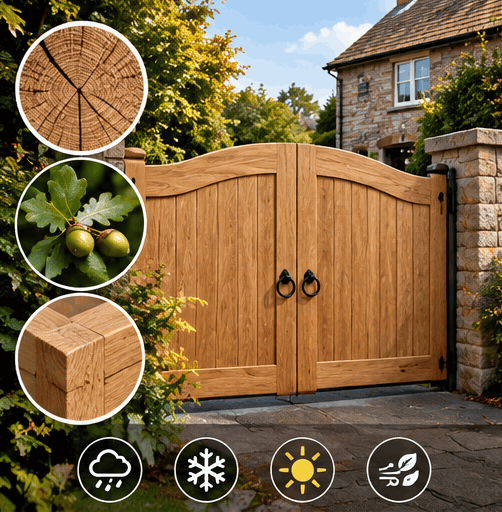
Oak: Performance Under Pressure
Oak is a popular hardwood for gates and has earned a well deserved reputation over decades of use in the UK. The dense structure of the material cells creates natural moisture resistance that matters much in weather where gates can be subject to prolonged damp.
Tannins in oak naturally protect from fungal activity, which makes the material less sensitive to periodic treatment failures. If one year passes without treatment, the gate made of oak can still serve safely. In comparison, lack of treatment for one year for softer materials means trouble much sooner.
In autumn, oak gates stand out because the wood absorbs moisture slowly. This means the size changes gently, not all at once. Oak takes in moisture from the air slowly, so its size changes gently instead of all at once. It prevents sudden dimensional increase that makes operating the gates difficult in wet seasons. The dimensional changes occur gradually.
The main problem oak faces in UK conditions is that heat stresses can cause the wood to crack faster than more stable materials. Sustained dry weather makes oak susceptible to surface cracking faster than more dimensionally stable materials. The beautiful grain structure that makes oak so impressive has zones of dimensional shrinkage that are susceptible to the heat stresses. Oak exposed to the kind of heat seen in 2026 is more likely to crack and needs more regular maintenance to prevent damage.
Well-maintained oak can provide truly impressive life span among all boundary investments.
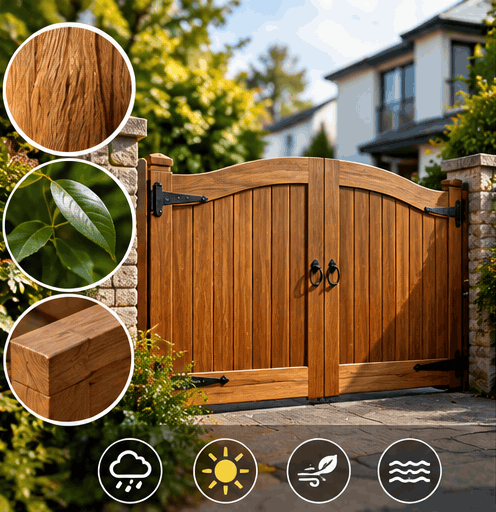
Iroko: A Material that Provides Great Functionality
Iroko occupies special space in the materials choice for gates. Compared to oak, the species gets less respect, costs less, and still performs very competitively in many conditions.
The interlocking grain structure of the material gives unique dimensional reactions to weather cycling in UK. The wet-dry cycling of autumn conditions makes the material move in a similar manner as it happens with oak species. The iroko moves less dramatically due to its special structure.
This results in good operational performance of the gates. Iroko installed in harsh weather conditions such as coastal locations or northern locations shows fewer seasonal dimensional movements in contrast to oak. This happens because the interlocking structure resists the changes that usually make timber shift against posts or lose contact with latches.
Reactions to treatments of the material differ from oak and should be known. Iroko contains natural oils that make some treatment products not to penetrate into the timber effectively. Good surface preparation makes it possible to get proper adhesion. Otherwise the treatment will fail even if high-quality product is used.
Another feature of iroko gates is great resistance to moisture. UK winters with prolonged moist environment tests all timber gates in very harsh manner. The resistance to moisture of iroko makes the material a great choice for places with poor overhead shading or locations that keep the gates moist due to shady environment.
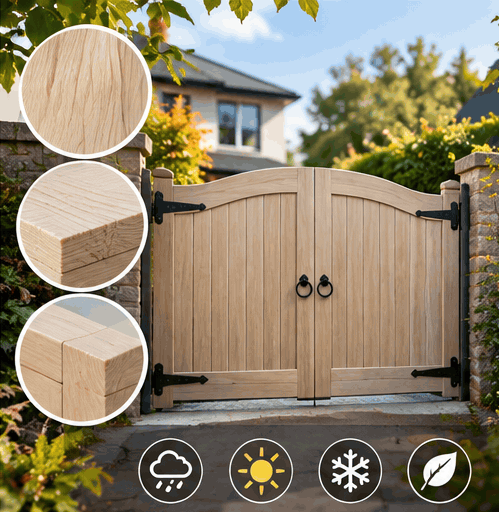
Accoya: The Modern Alternative
One thing should be stated at once to clarify further discussion about the material. It's not a hardwood species. Accoya is made from radiata pine, a softwood that is specially treated with a process called acetylation. Knowing this will help to understand its properties and place in material comparisons.
The acetylation alters the cell structure of the timber at the molecular level. Wood cells normally absorb moisture by interacting with hydroxyl groups in the cell wall. In Accoya, these groups are replaced with acetyl groups that do not bind with moisture. As a result, timber that is treated does not swell or shrink when moisture content changes.
The dimensional stability in UK conditions should be considered as a great advantage for autumn. The cycling wet-dry weather that affects oak and causes it to move and iroko to move slightly does not have any effect. The gates close consistently in any weather and latches operate correctly. Seasonal changes that cause frustration just disappear.
Another important quality of the material is its durability, which comes from the acetylation process that makes it resistant to rot and fungi. The acetylation process makes the wood more resistant to rot from fungi than most natural hardwood species. Modified timber is absolutely resistant to fungi and combined with moisture resistant nature, the material is almost indestructible in UK conditions.
There are disadvantages that should be mentioned too. The material lacks character of natural wood. It is processed and finished in different manner compared to traditional timber. There is philosophical conflict between natural origin of hardwood gates and the modern artificial material in the minds of purists. For period properties or places where the natural look of wood matters, sticking with traditional timber is the better choice.
Species Choice
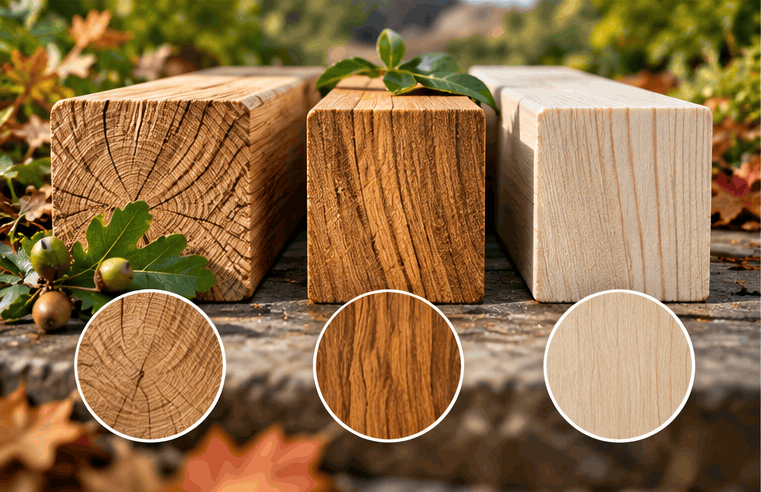
Each species has its own strengths and is better suited to certain situations than others, as shown in the earlier comparison. Justified premium price and beauty of oak make it natural choice when the conditions and the maintenance capacity allows that. The practicality of iroko gives clear advantage under demanding conditions at lower price. Accoya is a good choice if you are willing to accept its look instead of natural hardwood.
Garden Gates Direct has supplied all three species in the UK for over 25 years. Best installations in terms of performance always had one common feature – right choice of the species for conditions and realities of the property.
- Railings